
Professional co-development
A peer-learning method to address concrete professional challenges through collective intelligence.
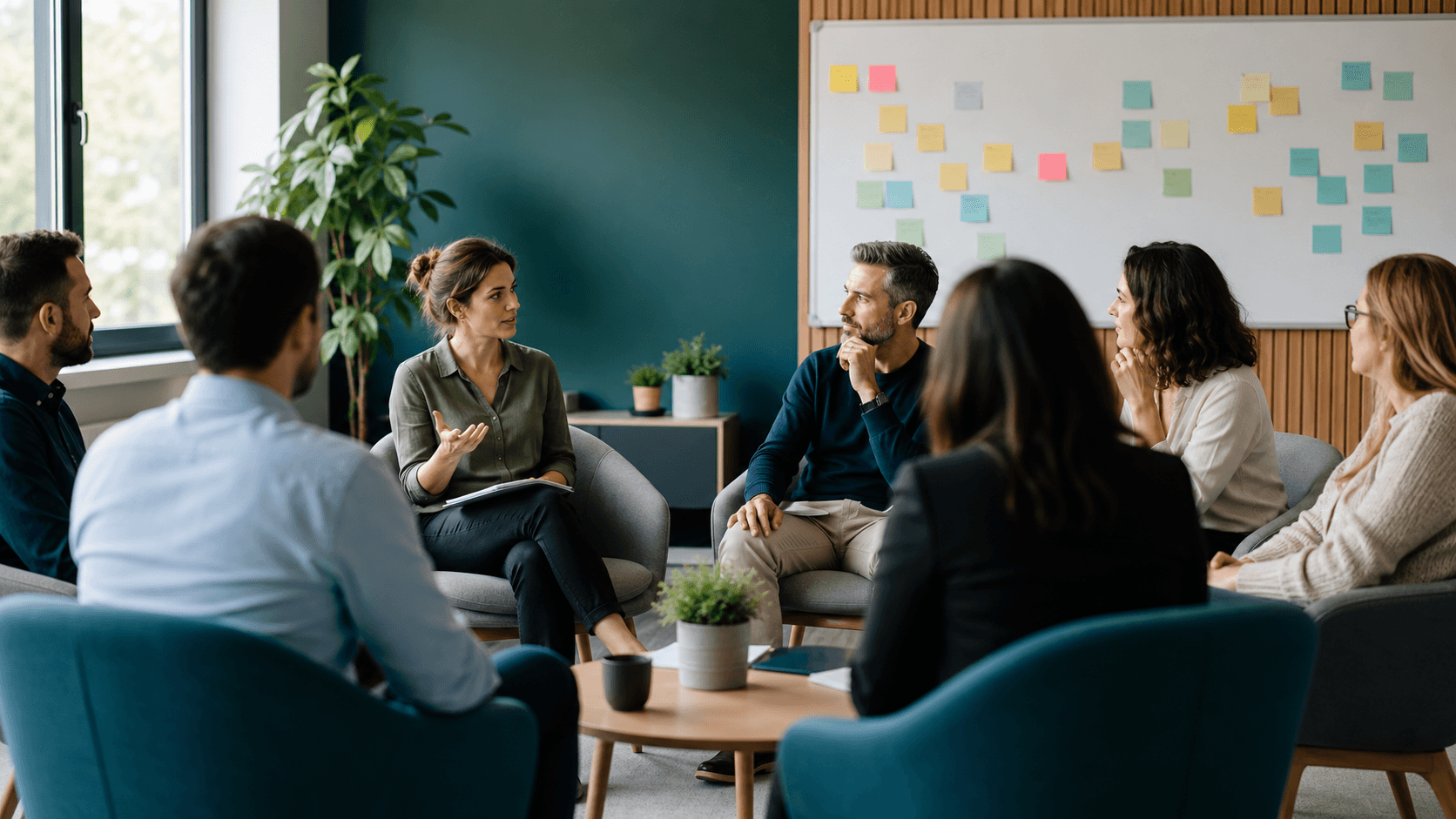
Professional co-development is a group learning method based on collective intelligence. A small group of peers meets regularly to work through concrete professional challenges using a structured process.
Group
5 to 8 peers
Approach
Action learning
Lever
Collective intelligence
Objectives
- Solve a real work challenge experienced by one participant.
- Develop everyone's skills through listening, feedback, and questioning.
- Strengthen team cohesion and feedback culture.
- Support learning through action and sharing.
Roles
Client
Presents a concrete challenge they want to work on during the session.
Consultants
Bring questions, ideas, feedback, and possible courses of action to the client.
Facilitator
Holds the frame, pacing, psychological safety, and respect for the process.
Process steps
Payette & Champagne model.
Presentation
The client presents the topic of the session and describes the situation they want to work on.
Clarification
Consultants ask neutral questions to understand the context without proposing solutions yet.
Contract
The client defines their need and clarifies what they expect from the group during the session.
Consultation
Consultants share ideas, feedback, hypotheses, experiences, and possible solutions.
Synthesis and action plan
The client keeps what is useful and defines the next actions they want to test.
Learning
Everyone shares what they take away from the session for their own professional development.
Best practices
- Timebox each step clearly.
- Create a climate of trust, active listening, and non-judgment.
- Rotate roles in the group to make everyone responsible.
- Use an individual learning journal to anchor learning.
Explore also
A structuring tool to design or evolve an agile community around identity, experience, and structure.
The facilitator wears three hats and moves between them before and throughout the session.
A structured facilitation method to explore a topic or solve a problem through different thinking postures.
An effective facilitator does more than run a session: they create the conditions for the group to work well and produce results.