
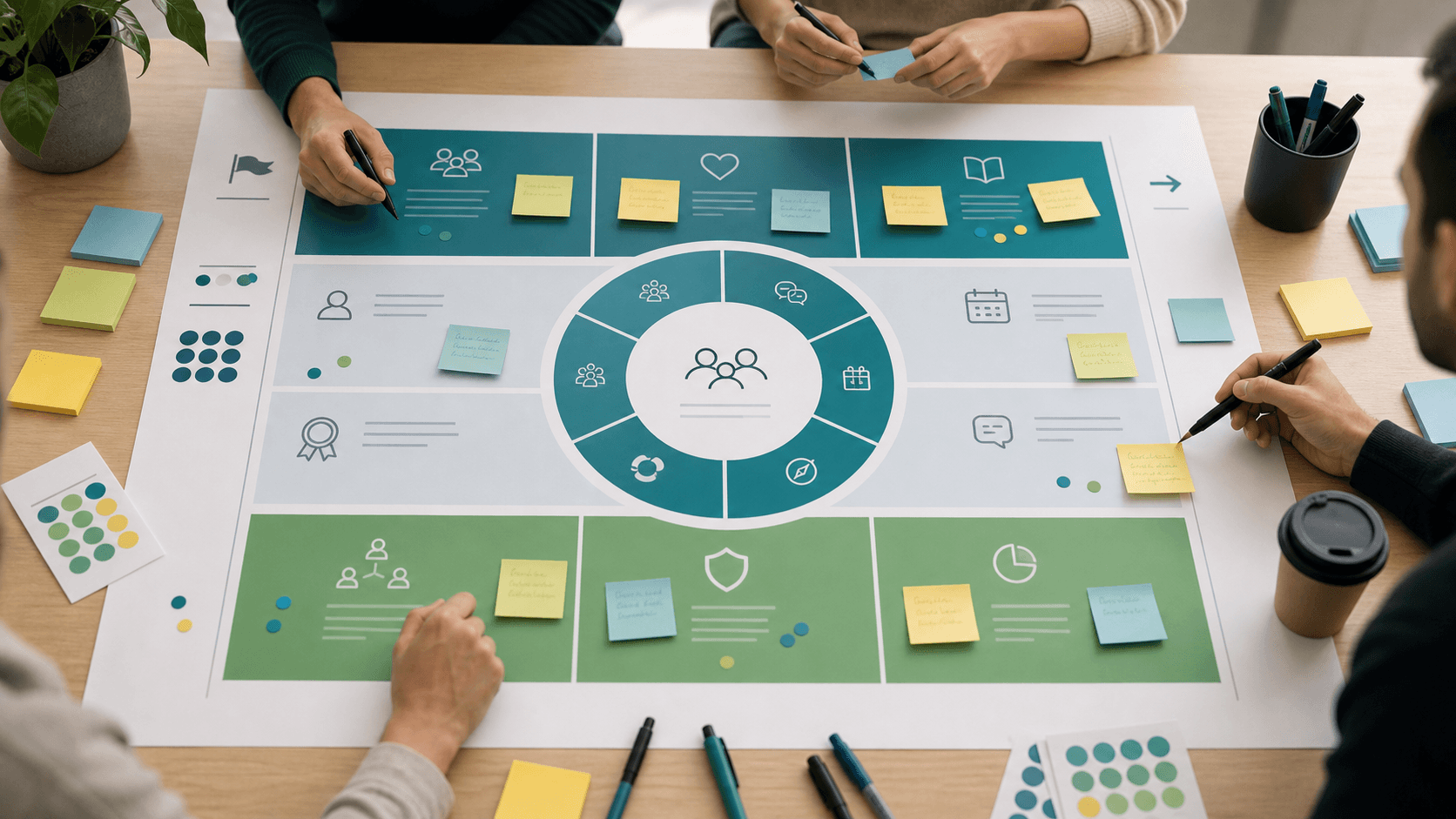
Community Canvas
A structuring tool to design or evolve an agile community around identity, experience, and structure.
The Community Canvas is a structuring tool to design or evolve an agile community. It helps create collective alignment around three pillars: identity, experience, and structure.
Pillars
3
Themes
17
Audience
Agile community
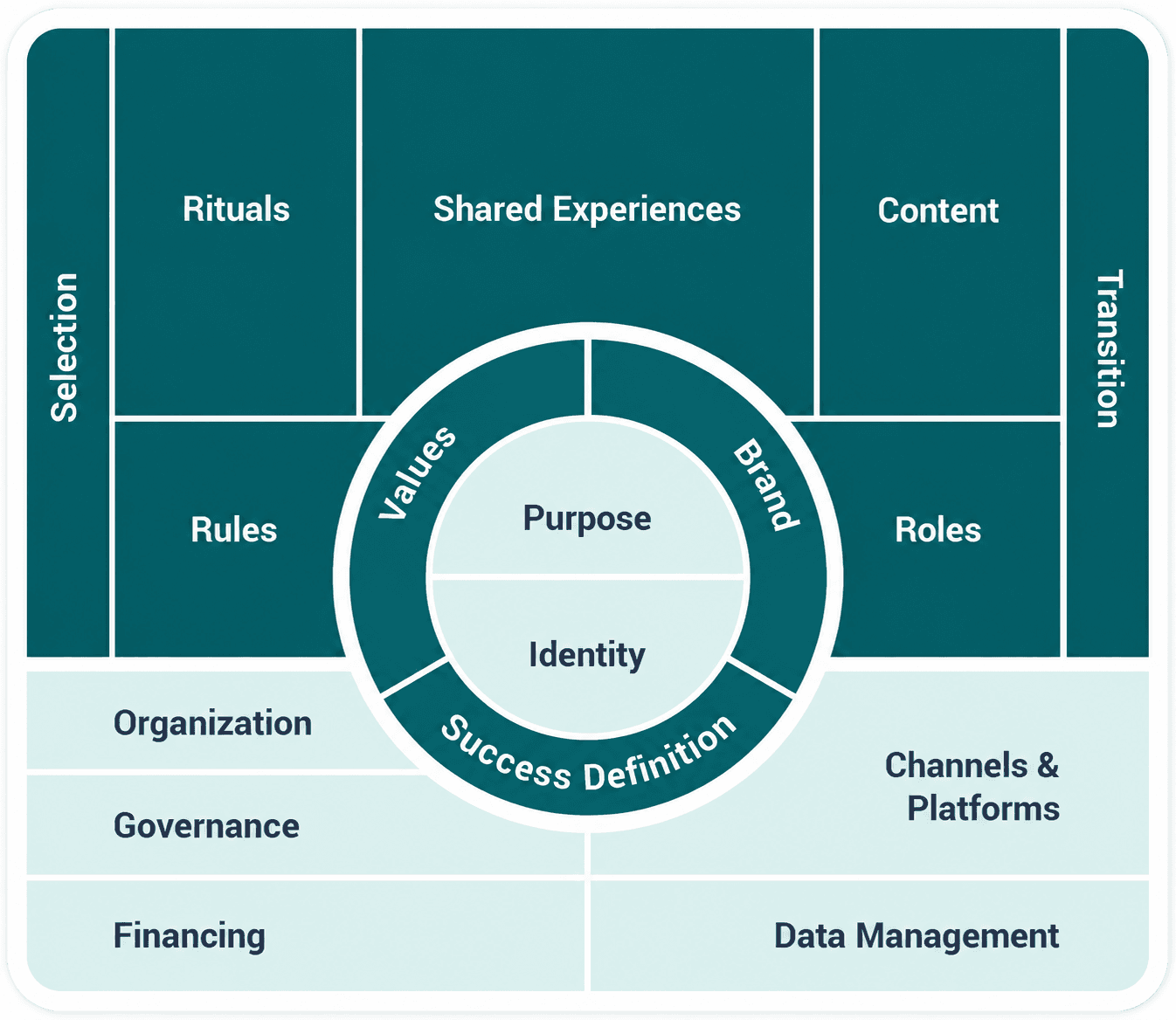
The 3 pillars and their themes
Identity
Why the agile community exists, who it serves, and what it stands for.
Purpose
Share, learn, grow skills, and align practices.
Member Identity
Agile roles, experience levels, and shared agile DNA.
Values
Kindness, transparency, feedback, continuous improvement, experimentation.
Success Definition
Member engagement, field impact, and agile maturity growth.
Brand
Name, tone, symbols, humor, shared image, and internal supports.
Experience
What members concretely experience and how agility is embodied day to day.
Member Selection
Open to agile roles, with possible participation criteria.
Member Transition
Onboarding new members and handling departures.
Shared Experiences
Communities of practice, Lean Coffee, dojos, talks, experience sharing.
Rituals & Traditions
Icebreakers, welcome kit, fun rituals, closing rituals, shared codes.
Content
Internal knowledge base, shared tools, templates, and experience reports.
Rules
Presence, non-selling, kindness, confidentiality, and expected engagement.
Roles
Facilitator, scribe, timekeeper, speaker, or other rotating roles.
Structure
How the community is organized and how it sustains itself over time.
Organization
Led by a chapter lead or by a rotating collective.
Governance
Consent-based decisions, rotating roles, recurring feedback.
Financing
Learning budget, Agile CoE sponsorship, allocated time in planning.
Channels & Platforms
Slack, Teams, Miro, Confluence, internal newsletters.
Data Management
Member base, sharing directory, and topic backlog.
Use cases
- Launch an agile community: Scrum Masters, Product Owners, Agile Coaches.
- Realign a Chapter that has lost momentum.
- Federate a transverse community across teams or entities.
- Prepare for a Lead Chapter or Lead Agile Coach role.
- Facilitate a repositioning or shared vision workshop.
Facilitate a Community Canvas workshop
Collectively clarify the purpose, practices, and rules of the agile community.
2h to 4h depending on the expected depth.
Volunteer or concerned members, ideally 6 to 12 people.
Suggested flow
Tools
- Miro, FigJam, or printed A0 canvas.
- Physical or digital sticky notes.
- Timer, voting dots, and a facilitator.
Best practices
- Favor co-construction rather than top-down imposition.
- Address existing pains: fatigue, lack of meaning, misalignment.
- Anchor the concrete: useful rituals, effective tools, directly reusable content.
- Keep an agile mindset: iterations, feedback, and community MVP.
Explore also

A peer-learning method to address concrete professional challenges through collective intelligence.

The facilitator wears three hats and moves between them before and throughout the session.

A structured facilitation method to explore a topic or solve a problem through different thinking postures.

An effective facilitator does more than run a session: they create the conditions for the group to work well and produce results.