

The 10 facilitator self-assessment steps
An effective facilitator does more than run a session: they create the conditions for the group to work well and produce results.
An effective facilitator does more than run a session. They create the conditions for the group to understand the objective, participate well, move within a clear frame, and produce usable outcomes.
01
I clearly explain the workshop objective
The group should know why it is gathered, what is expected, and what a useful outcome will look like by the end of the session.
02
I prepared the necessary material in advance
Materials, room setup, digital tools, instructions, timer, and working spaces should be ready before the group arrives to avoid losing attention at the start.
03
The session started and ended on time
Respecting time builds trust. It shows that the frame is held and that the group's energy is taken seriously.
04
I stay neutral on content and attentive to the process
The facilitator does not push their own solution. They observe dynamics, clarify steps, and help the group move forward without taking control of the content.
05
I encourage participation
Everyone needs a real opportunity to contribute. Alternating individual writing, small-group exchanges, and collective discussion helps balance participation.
06
I manage distractions during the session
Distractions should be acknowledged without drama: returning to the frame, changing format, or offering a short break can be enough to restore attention.
07
I manage disruptive participants
Disruptive behavior often hides a need, concern, or poorly directed energy. The facilitator protects the group while treating the person with respect.
08
I encourage diversity of viewpoints
Decisions are stronger when useful disagreement can surface. The facilitator creates space for minority opinions and blind spots to be expressed.
09
I adapt timing and process based on the group's dynamics
A good agenda is not rigid. If the group gets stuck, speeds up, loses energy, or deepens an important topic, the facilitator adjusts the pace without losing the objective.
10
I summarize decisions and conclusions
The session should end with a clear synthesis: decisions, open points, next actions, owners, and deadlines when they exist.
Explore also

The facilitator wears three hats and moves between them before and throughout the session.

Simple, concrete reflexes to help a facilitator handle silence, conflict, distractions, time pressure, or hierarchy in a meeting.
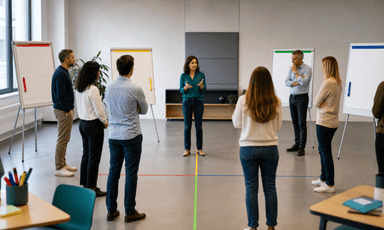
A workshop to explore different communication styles without putting people into boxes.

A creative and immersive icebreaker that stimulates imagination, builds connection, and creates a playful shared moment.